The global “anti-gender movement” is a well-funded, coordinated, decades-long movement against gender equality and democracy. We can learn how to resist it by studying the tactics it uses to strip people of their human rights and promote authoritarianism.
The United Nations Commission on the Status of Women
The anti-gender movement was a subject of discussion at the 70th session of the United Nations (UN) Commission on the Status of Women (CSW).
,
Stay Updated
Keep up with the League. Receive emails to your inbox!
,
The League of Women Voters has had observer status at the United Nations since 1945 when it was invited by President Harry Truman to serve as a consultant to the US delegation. The UN Commission on the Status of Women is an intergovernmental body dedicated to promoting the rights and empowerment of women and girls, which meets annually to discuss issues affecting gender equality in politics, economics, and society.
Every year, the Commission holds a two-week session at the UN Headquarters in New York for representatives of UN Member States, UN entities, and civil society organizations to discuss progress and gaps in the implementation of the 1995 Beijing Declaration and Platform for Action, a blueprint for advancing women’s rights.
This March, LWVUS’ UN Observer Corps attended the 70th session of CSW. In select side events, experts spoke about the global movement against gender equality and democracy, which shed light on many government actions we’re seeing in the United States today.
What is the Anti-Gender Movement?
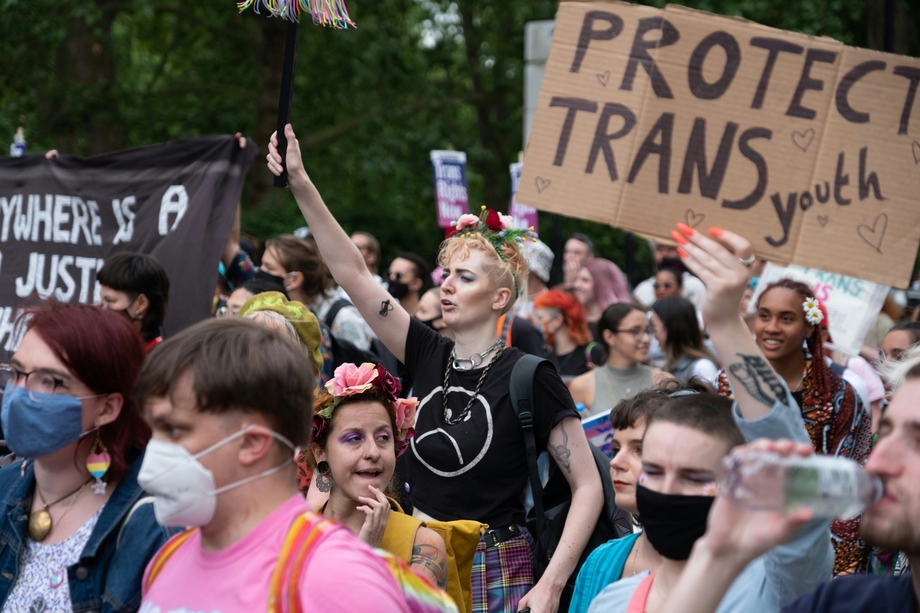
There is a well-funded, coordinated, decades-long global movement, referred to as the “anti-gender movement,” in which activists and organizations across the world oppose and work to undermine political and social progress toward gender equality, sexual and reproductive health and rights (SRHR), and LGBTQIA+ rights, for lesbian, gay, bisexual, trans, queer, questioning, intersex, asexual, and other sexual and gender minority people.
,
,
A 2023-2024 working paper from the UN Research Institute for Social Development — an independent institute within the UN system — explains that at the UN 1994 Cairo International Conference on Population and Development and the 1995 Beijing World Conference on Women, there was proposed language to use more expansive definitions of “gender” and “family” and to include SRHR. There, anti-gender advocates formed international coalitions and, by the end of the 1990s, this anti-gender alliance was using UN policy frameworks and processes to further their agenda of eroding feminist and LGBTQIA+ policies, global and national social movements, and future advocacy. This included leveraging their work at the UN to bolster relationships with people with political influence, including UN observers.
What Tactics Does the Anti-Gender Movement Use?
The anti-gender movement uses a multitude of tactics that parallel government actions similar to those we've seen intensifying in the United States. As Neil Datta, founder and Executive Director of the European Parliamentary Forum on Sexual and Reproductive Rights explained, these include putting in partisan judiciaries to establish case law that is harder to overturn and limit the likelihood of the courts checking the administration’s power.
,
,
Another tactic is severing geopolitical alignments with democratic nations to create instability and allow conservatism to take hold. We’ve seen this in the United States’ withdrawal from multiple international agreements like the Paris Climate Agreement and the United Nations Framework Convention on Climate Change, as well as its threats to withdraw from the North Atlantic Treaty Organization (NATO).
Finally, speakers talked about supporting deregulation of social media. This facilitates the:
- Radicalization of men and boys
- Socialization of the expected roles of women and girls
- Spreading of mis- and dis-information including about women’s reproductive health
- Perpetuation of gender norms, and
- Polarization of society.
We’ve seen this in the US, for example in the 2025 Executive Order that restricts the federal government from influencing social media platforms to limit or remove content, and rolls back certain efforts to manage hate speech and mis- and disinformation online.
,
,
Why is the Anti-Gender Movement a Democracy Issue?
As Lauma Paeglkalna, Parliamentary Secretary at the Ministry of Justice in Latvia explained in her remarks, attacks on gender equality are often used as a step toward assaults on broader fundamental rights, the rule of law, and democratic institutions. A 2025 report published by UC Berkeley and Over Zero, a violence prevention organization, examines how gender (and often sexuality) is weaponized to facilitate authoritarianism. The report explains that authoritarian regimes:
- Manufacture a threat by depicting so called “gender ideology,” along with feminists, and LGBTQIA+ people, as threats to national identity, security, women, children, and traditional values. This normalizes us-versus-them thinking and justifies government overreach under the guise of protection.
- Normalize authoritarian ideas by using gender identity, sexuality, and related rights to standardize social hierarchy, challenging the democratic principles of equality and human rights.
- Change culture by exploring gender in non-political contexts, like lifestyle content.
- Build a large coalition by bringing together groups that have different beliefs about gender (e.g. misogyny and transphobia), united against a common enemy.
- Divide and polarize by framing gender as divisive and working to fracture pro-democracy coalitions.
- Distract by manufacturing and publicizing gender-related controversies like misinformation about trans rights and purported threats to children’s safety to divert people’s attention from anti-democratic government overreach.
Further, Harvard Kennedy School Professor Dr. Erica Chenoweth and Lecturer in Public Policy Dr. Zoe Marks speak to the parallel global trends of rising authoritarianism and attempts to roll back women’s and LGBTQIA+ rights. Dr. Marks explains that patriarchy marginalizes and victimizes women and LGBTQIA+ people to consolidate power among some men, such as we’ve seen in the US in numerous anti-trans rights executive orders. This parallels and facilitates authoritarianism, which requires the creation of hierarchy and the consolidation of authority among some people.
What You Can Do
- Learn more about Dr. Chenoweth’s observations on authoritarianism in their interview with LWVUS CEO Celina Stewart, Esq.
- Commit to joining the League’s Unite & Rise 8.5 Campaign, based on Dr. Chenoweth’s research.
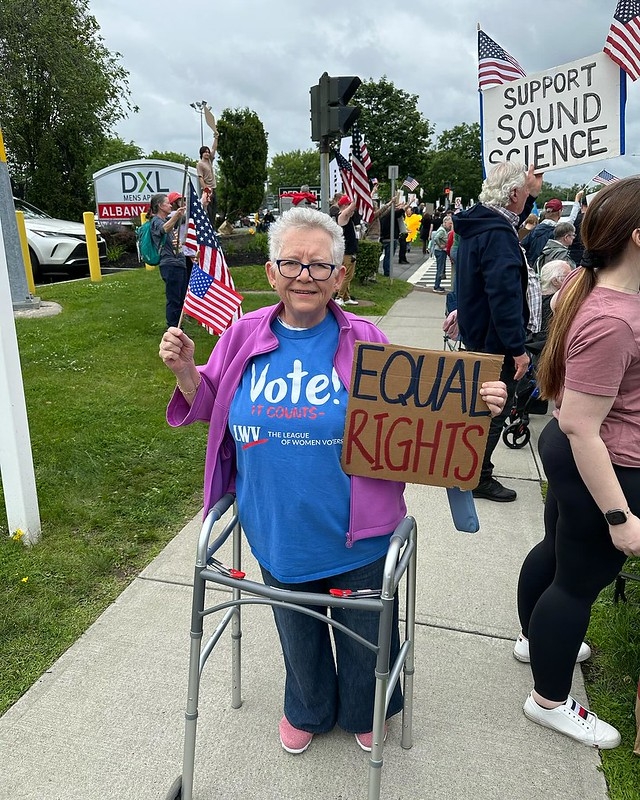
- Follow the League of Women Voters’ work on equal rights.
- Join your local League to learn about and support efforts to protect and expand equal rights.