This blog was written by LWV Policy Intern Jaz Abbey.
On February 12, 2026, the Environmental Protection Agency (EPA) reversed its 2009 Endangerment Finding, which had allowed the agency to regulate greenhouse gas (GHG) emissions. This is a devastating decision as GHG emissions are the leading cause of climate change.
The decision to roll back the finding goes against long-established scientific evidence, worsening climate change’s harm to human health, the environment, and the economy. In the same ruling, the EPA also rescinded vehicular GHG emission standards. These decisions will multiply damage to the environment and all of us who rely on it.
,
Stay Updated
Keep up with the League. Receive emails to your inbox!
,
What is the EPA?
The EPA is an independent agency of the US government, established by President Nixon in 1970. Its purpose is to protect human health and the environment, ensuring Americans have clean land, water, and air. They do so by implementing environmental laws, undertaking important studies, and educating the public about the environment, among other actions.
EPA Air Regulation and the Endangerment Finding
The Clean Air Act was originally signed into law in 1963. It requires the EPA to regulate air pollutants that endanger public health or welfare.
Then, in 2007, the US Supreme Court ruled in Massachusetts v. EPA that the EPA could regulate GHGs under the Clean Air Act.
,
,
Finally, in 2009, the EPA adopted the Endangerment Finding, which acknowledged that GHGs, carbon dioxide, methane, nitrous oxide, hydrofluorocarbons, perfluorocarbons, and sulfur hexafluoride are pollutants that negatively impact the environment. The doctrine stated that these six GHGs endanger public health and welfare, providing the legal basis for the EPA to contribute to climate change policy by regulating GHG emissions from things like motor vehicles, engines, and power plants. The Endangerment Finding led to 16 years of GHG emissions regulations.
A Problem for Air Quality and the Economy
The EPA claims that the authority to combat air pollution lies with Congress, but its mission suggests otherwise. According to the EPA’s official website, the Agency has a responsibility to ensure that Americans have clean air and that national efforts to reduce environmental risks are based on the best available scientific information. Regulating GHG emissions is essential to achieving clean air, and there is a scientific consensus on the need to reduce them. When Congress goes against these interests, the EPA’s mission and the current administration are inherently at odds.
,
,
Indeed, many climate scientists believe that overturning the Endangerment Finding “undermines decades of scientific progress” at a time when rising global temperatures are having a catastrophic effect on people worldwide. Further, this action could trigger the dismantling of additional climate regulations, such as those focused on power plants, oil, and gas.
The impact of Congress’s decision is not just environmental but financial. The EPA cited saving taxpayers money and creating other economic advantages as reasons for rescinding the Endangerment Finding. However, this justification disregards many important factors, including the fact that the economy is already diversifying away from fossil fuels. Limiting the EPA’s impact on GHG emissions will not stop global environmental progress; therefore, it will hurt the economy by challenging sustainable changes already underway. By neglecting the need for GHG regulations, the EPA is not only contributing to the worsening climate crisis but also allowing other countries, such as China, to lead in manufacturing electric vehicles and other clean energy efforts.
Moreover, the environmental cost of the EPA’s rule rescission exceeds any potential savings. The increasing costs of climate change include property insurance premiums, heating and cooling systems, healthcare, agricultural adjustments, and many others. Recovery from climate-related disasters alone costs a cumulative $2.9 trillion from 1980 to 2024. The economic costs, and additional costs that cannot be quantified, can lead to significant, often irreversible changes in the health of the environment.
,

,
Despite Congress’s recent decision, it’s clear that regulations on GHG emissions, including vehicular emissions, are crucial to preventing irreversible environmental damage, saving money, and limiting climate risk.
Environmental Protections are a Crucial Tenet of Democracy
The League believes that environmental protection and pollution control are responsibilities shared by all levels of government, but especially the federal government, as it can provide leadership and technical and financial assistance to necessary efforts. The League also supports the maximum protection of public health and the environment.
Current and future generations have a right to a habitable planet. However, instead of guaranteeing future generations a healthy and livable environment, the EPA is shirking away from its regulatory duties. GHG emissions are the leading cause of climate change. In turn, climate change poses risks to our democracy through natural disasters, poor air quality, food and water insecurity, forced human migration, and global conflict. All of this threatens our access to life, liberty, and the pursuit of happiness, let alone the ability to participate in our democracy. The federal government must take action against sources of pollution to combat the climate crisis.
,
,
The League’s Environmental Advocacy and Opposition to the EPA’s Rescission
The League of Women Voters submitted comments to the EPA on September 22, 2025, in opposition to the EPA finalizing the proposed rule “Reconsideration of 2009 Endangerment Finding and Greenhouse Gas Vehicle Standards,” reasoning that the health and welfare of our country depend on it. Some of the League’s primary concerns within its opposition to rescission are:
I. Rescission of the Endangerment Finding is not supported by robust scientific evidence.
II. The economic argument put forth in the proposed rule is unsound.
III. Combining rescission of the Endangerment Finding and the Greenhouse Gas Vehicle Standards conflates these two related but distinct rules, downplaying the impact of the EPA’s proposed rule.
The League has a rich history of supporting goals and policies aligning with the best available climate science and ensuring a stable climate system for future generations. In the late 2000s, the League supported legislation to establish a cap-and-trade system, which would have cut GHG emissions from electric power, transportation, and manufacturing sources. The League also lobbied to promote conservation and renewable energy.
,
,
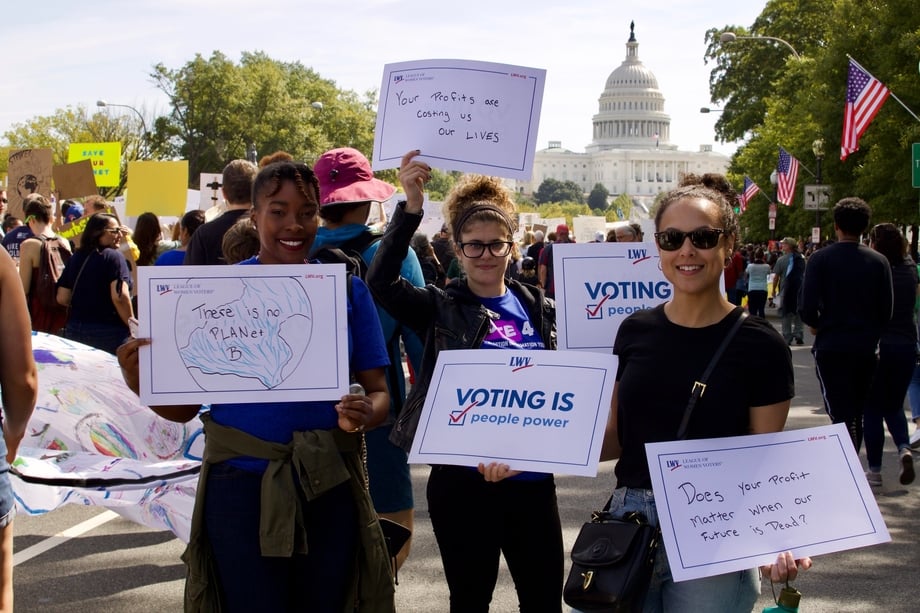
In 2012, when the EPA proposed the first-ever standards to control industrial carbon pollution from power plants, which causes global climate change and increases health problems, the League joined with its environmental and social justice allies in collecting the largest number of comments ever submitted in review of an EPA regulation. The League continues to advocate for the planet, noting that the EPA’s recent rescissions will leave Americans less safe, less healthy, less prosperous, and less certain about their future.
What's Next?
The EPA’s rescission has already been challenged in court by a group of public health organizations and conservationists, as well as a group of young climate activists. Twenty-four states, as well as many cities and counties, have comprised a coalition suing the Trump Administration over the EPA’s ruling. The lawsuit aims to reinstate the Endangerment Finding and the limits on vehicle GHG emissions.
Many states are preparing to enact indirect source rules to regulate vehicle emissions in certain areas. These types of rules do not need EPA approval and are under consideration this year in California, Illinois, New Jersey, and New York. Another way states may react is through cap-and-invest programs that limit pollution and carbon emissions from power plants. California and Washington already have these programs in place, while Maryland and Virginia are considering legislation to implement similar measures.
What You Can Do
- Follow the League of Women Voters’ materials and advocacy work to protect the environment;
- Join your local League to learn about and support local and state initiatives to protect the environment; and
- Learn more about climate change policies from organizations like:
- Climate Action Campaign
- Environmental Defense Fund
- Greenpeace
- National Resource Defense Council
- The Nature Conservancy
- World Wildlife Fund