The internet changed the speed, scale, and scope of information we receive and how it impacts our civic life. Researchers say we’re living in an “information age,” with the amount of information created every two days “roughly equivalent to the amount...created between the beginning of human civilization and the year 2003.”
In sum, we’re experiencing information overload, and it’s hard to drown out the noise when there’s so much competing for our attention.
,
,
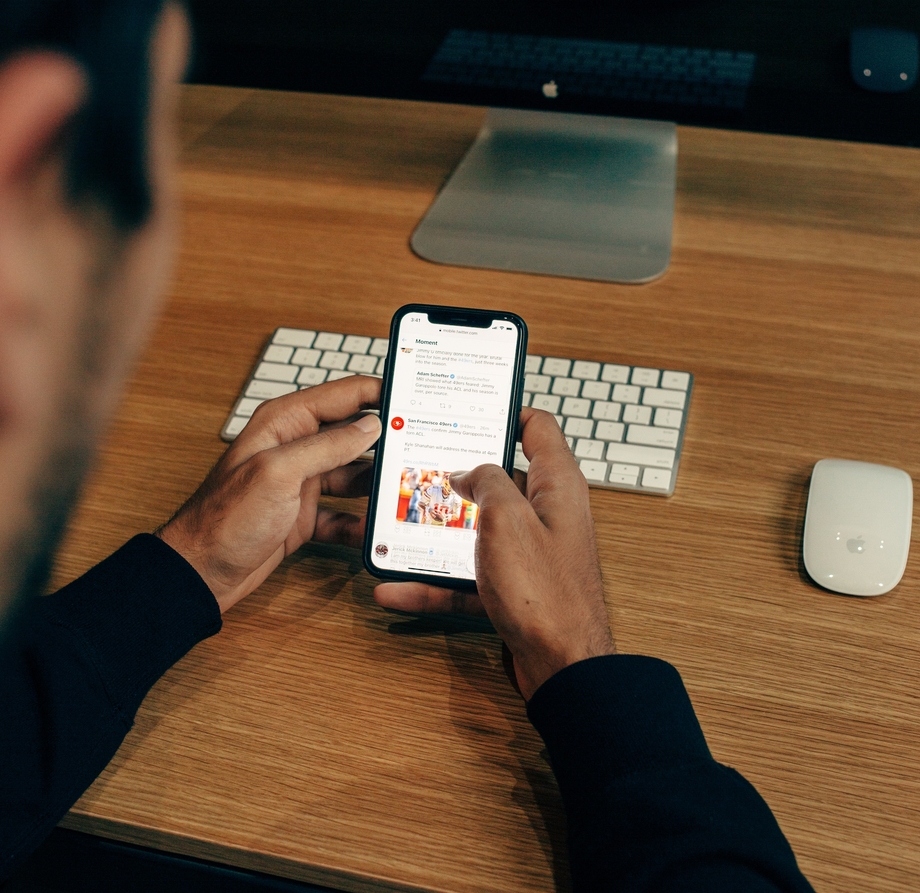
Social media platforms in particular have exploded with news, opinions, and analyses on everything from pop culture to the economy. Overall, about half of adults get their news from social media, and digital sources continue to be a significant way that folks get information.
The Rise of “Influencers”
“Influencers” (also known as “creators”), or regular people with large social media followings, hold significant power in the information age. As the term suggests, their posts can influence their followers’ thoughts, spending habits, and even their votes.
,
,
A major shift in the digital age is that anyone, even people with relatively small audiences but high levels of engagement within those audiences, can be an influencer.
Political influencers play an active role in shaping our elections and democracy. A report from the Center for Democracy & Technology found that half of TikTok users between ages 18 and 29 use the app to keep up with politics. This isn’t inherently bad; influencers have the unique ability to translate complex issues into appealing, digestible content. In the best cases, it helps people become more informed and feel empowered around issues that impact them. Content creators impact civic engagement, building community and inspiring action.
,
Get involved in your community! Search our 800+ state and local Leagues.
,
But not all influencer posts are reliable or accurate. In many cases, viral attention outweighs accuracy in social media algorithms, meaning that videos that spike users’ emotions or court controversy may appear on their feeds more often than posts with accurate information.
Influencers may also have financial relationships, whether it’s direct monetary support or the receipt of free goods, from various companies, outlets, and more. While the Federal Trade Commission requires influencers to disclose these relationships, compliance can’t be 100% guaranteed.
A similar issue is present with AI; while creators are supposed to disclose the use of AI in videos, many don’t. There are now entire accounts whose “spokespeople” aren’t actual people, but AI-generated influencers.
,
,
Knowing which influencers you can count on as trusted messengers is essential. One way to do so is through the SIFT method.
The SIFT method
The SIFT method is a great way to confirm the accuracy of news and information coming from influencers and others. SIFT stands for:
- Stop.
- Investigate the source.
- Find better coverage.
- Trace claims back.
Before reacting to an influencer’s video, stop and consider the context. Ask yourself: What type of information is this? Is it news, analysis, or opinion? Reflect on what sources are cited and what motivated the creator to share it.
Next, investigate the source using a media bias or fact-checking resource. What are the original sources? Do those sources have an agenda?
Find additional coverage from non-influencers in the news and compare their narrative with the influencer’s. Are their stories aligned, or are there some notable differences?
,
,
Last, trace any claims and quotes to their original context or source. Is the influencer quoting a politician? Find the full quote. Are they talking about a Supreme Court decision? Look up the actual case.
Practicing the SIFT technique will help you identify which influencers are doing their homework and which may be spreading unreliable information.
LWV and Networks of Trusted Messengers
Access to trusted information is the ultimate form of inoculation against disinformation. The League works hard to remain a trusted messenger for voters, and to uplift other reliable information sources around elections. Everything we post goes through a meticulous vetting process to ensure all information comes from reliable sources, then is further edited for simplicity, clarity, and accuracy.
,
Stay Updated
Keep up with the League. Receive emails to your inbox!
,
LWV does this in part by building relationships with election officials so we can share insight on how elections function and the impact their work has on voters. In 2025, League chapters across the nation held 3,200 meetings with election officials, and 5,000 League members served as election and poll workers.
League chapters continuously strengthen ties with election officials in their communities to educate voters about upcoming elections through resources like VOTE411.org, our one-stop shop for reliable election information in English and Spanish.
Civic Power
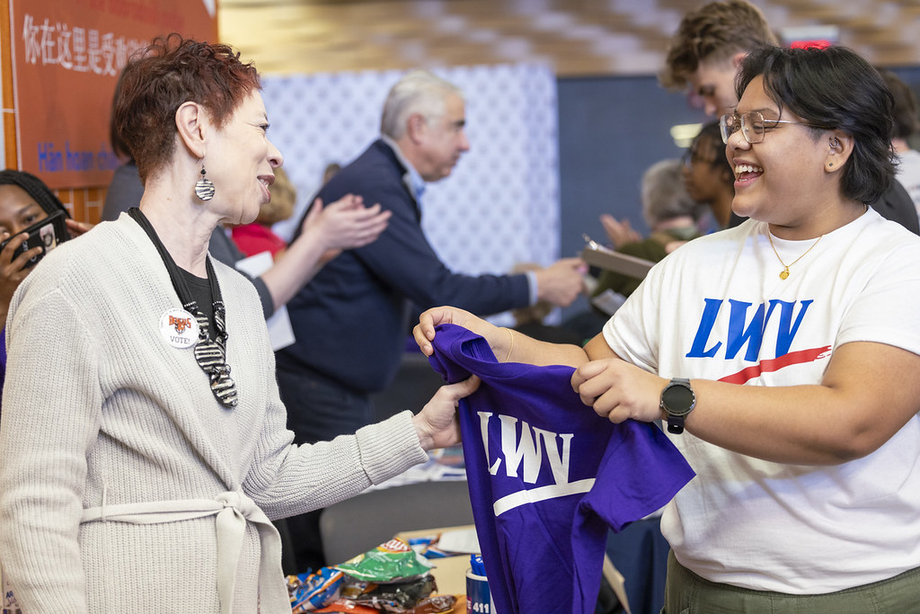
Civic health depends on voters who are informed, educated, and engaged in our democracy. Social media influencers can play a major part in mobilizing young people around elections, voting rights, and more. As they shape political conversations, they can also drive voter registration and turnout and cultivate networks of trusted messengers.
,
,
As consumers of media and influencer content, it's our job to determine which sources we can trust. Using tools and habits like the SIFT method to center the facts, staying aware of emotional content, and giving ourselves permission to step back helps us navigate information more thoughtfully.
Influencers have the power to do just that: influence. However, the real power comes from the action that everyday people take offline. An influencer may inspire you to sign up as a poll worker or write to your congressperson, but it’s your action that builds healthy communities and cultivates the change we hope to see.
Want to take action today? LWV’s “Unite and Rise 8.5” initiative to defend democracy is just one way you can get started. Commit to action with Unite and Rise 8.5 — and then be a trusted messenger and ask your friends to get involved, too. We’re all influencers on some level. Let’s share reliable information and inspire action, together!