If you’re interested in voting rights and representative democracy, you’ve likely heard about the US Supreme Court case Louisiana v. Callais. With a devastating, anti-voter decision in April 2026, Callais is likely to become the most consequential Supreme Court case in over a decade.
On April 29, the Court issued its opinion in Callais. In a 6-3 ruling, the Court weakened Section 2 of the Voting Rights Act (VRA), which prohibits any voting rule or procedure that discriminates on the basis of race, color, or language minority status, to the point of inoperability. This sends a clear message to the nation: racial discrimination in redistricting is acceptable when done under the guise of partisan gerrymandering. The ruling has greenlit the destruction of voters of color’s main tool for challenging racially discriminatory voting practices. This has led to a frenzied redrawing of congressional voting district maps.
,
Stay Updated
Keep up with the legal updates and more. Join our email list!
,
Because this case is so complicated and crucial to the future of voting rights, the League has shared various explainers about its long journey through the court system. "Racial Vote Dilution and Gerrymandering in Louisiana v. Callais" guides you through the background of the case. "Louisiana v. Callais and Attacks on the VRA" explains why the Supreme Court heard oral arguments in the case for two years in a row. If you need to catch up on how we got here, check out those resources first and then come back to this blog.
SCOTUS’s Decision in Louisiana v. Callais
In 2022, the Louisiana legislature passed a congressional map that packed several majority-Black cities into a single district, disempowering Black voters. Various parties sued, calling the map an unconstitutional racial gerrymander. In response, Louisiana’s legislature drew a new, more representative congressional map with two majority-Black districts. Yet in 2024, the Supreme Court agreed to hear an appeal of the case challenging the remedial map. In April 2026, they struck down the new map as a racial gerrymander, returning to the original map with only one majority-Black district.
The message? Now, Louisiana and every other state can enact discriminatory maps with impunity.
,
,
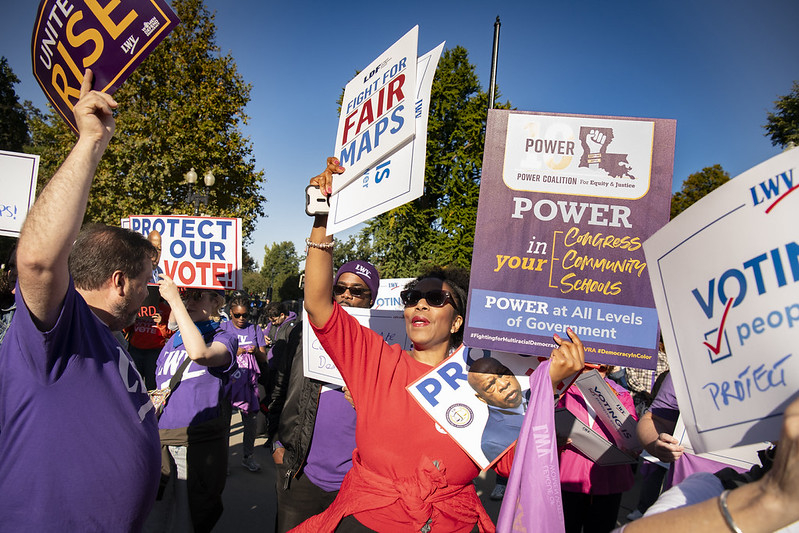
The Court has effectively eliminated Section 2 of the Voting Rights Act by rewriting the rules to ensure plaintiffs cannot succeed in cases challenging racial discrimination in redistricting. Although the Court did not officially overturn its past, pro-voter rulings, such as 2023’s Allen v. Milligan, or hold Section 2 to be unconstitutional, the opinion effectively does both.
Six Supreme Court Justices summarily reversed decades of progress toward a multiracial democracy, turning their back on the Court’s own precedent, and gave governmental bodies across the country carte blanche to draw racially discriminatory maps.
,
,
As Justice Kagan said in her dissenting opinion:
“The Voting Rights Act is — or, now more accurately, was — 'one of the most consequential, efficacious, and amply justified exercises of federal legislative power in our Nation’s history’… It was born of the literal blood of Union soldiers and civil rights marchers. It ushered in awe-inspiring change, bringing this Nation closer to fulfilling the ideals of democracy and racial equality... I dissent, then, from this latest chapter in the majority’s now-completed demolition of the Voting Rights Act.”
What Does SCOTUS’s Callais Decision Mean?
Unfortunately, this decision creates significant challenges to the promise of a true representative democracy. The Court’s attack on the powerful tool hard-won by civil rights leaders will have both immediate and long-term consequences for voting rights in our country. Each state and all levels of government are at risk of less fair maps now that the Supreme Court has made it all but impossible to bring a successful challenge under Section 2 of the Voting Rights Act.
Midcycle Redistricting
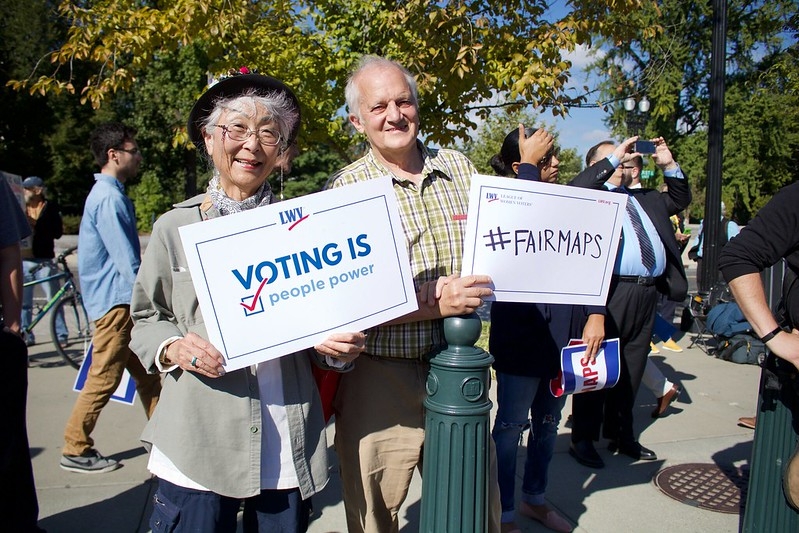
Now that Callais has been decided in a way that effectively eliminates Section 2, there is already a push for additional mid-cycle redistricting before the 2026 midterm election. Before the decision, though most filing deadlines for congressional candidates had passed, several states indicated a desire to redistrict before the midterm elections. After Callais, they moved to do just that. The response has been a frenzied race to draw new, racially discriminatory maps ahead of the 2026 primary and general elections.
,
,
Since the Court issued the Callais decision, federal and state legislators, governors, secretaries of state, and more have advocated for redrawing maps. Numerous states across the South have already had special legislative sessions to redistrict. Florida passed new maps within hours of the Callais decision. Tennessee drew and passed new maps just days later. After back-and-forth, Mississippi decided not to hold a special session and to focus on redistricting before 2028. South Carolina’s legislature is in a special session to pass new maps as well.
Alabama has already passed legislation to push back the start of its primary election and is likely to redistrict, too, now that the Supreme Court has paved the way with Callais to discontinue the use of the map upheld in Milligan. This is despite an earlier court ruling that the existing map should stay in effect until 2028. Perhaps most shocking is Louisiana’s cancellation of its US House primary races after mail ballots had already been distributed. Some voters had already mailed back their ballots, and early voting was set to begin two days after the governor canceled the race, causing intense voter confusion. In addition to unleashing a free-for-all to redraw existing congressional maps, current maps drawn to comply with Section 2 will likely face attacks. These maps were drawn in compliance with Section 2 of the VRA to elect representatives for the local, state, and congressional offices. Now, they are vulnerable to challenges because of the Callais decision.
Racial Discrimination in Congressional Maps
Now that Callais has made it illegal to consider race in drawing maps that comply with Section 2, those who wish to deny voters of color the opportunity to elect their candidate of choice will be emboldened to challenge or redraw majority-minority districts. In many instances, map drawers will hide behind the reasoning that the new districts are drawn with the goal of creating safer districts for their party. This hyper-partisanship will make it very difficult for the voices of all voters to be taken into account in all political offices, from local school boards to the US Congress.
,
,
After years of the Voting Rights Act making it possible for communities of color to have a voice in electing those who represent their interests, discriminatory actors will be able to easily redistrict the United States into a pre-VRA landscape. A study done by Black Voters Matter and Fair Fight found that 191 state legislative seats and 19 congressional seats filled with representatives who were chosen by fair maps in majority-Black districts are at risk due to Callais. Only weeks after the decision, we are already seeing the elimination of majority-Black districts, which will make it even harder for voters of color to elect candidates of their choice.
Without knowing the full extent of what will continue to happen in the wake of this disastrous decision, we do know that the fallout will be catastrophic.
What Can We Do?
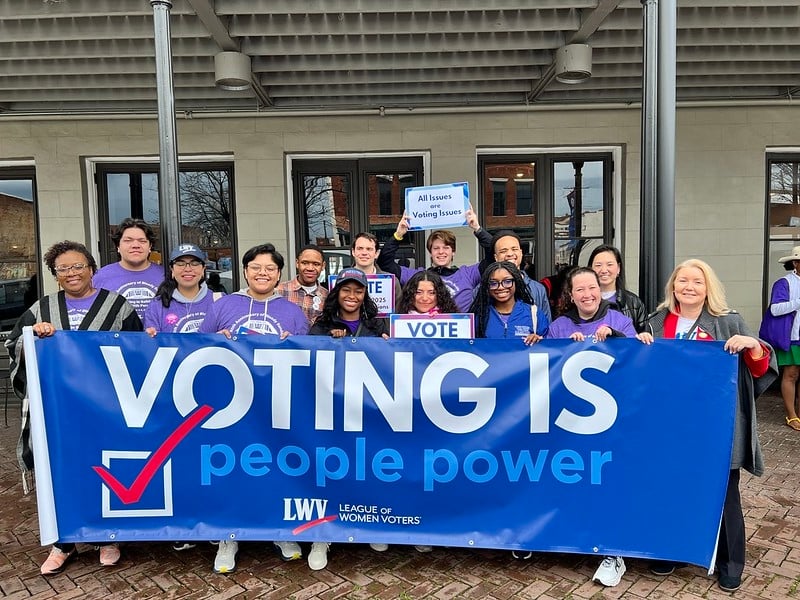
Despite this decision, Leagues and League members can push back against the destruction of fair maps and voting rights. As a nation, we must harness people-power to fight for a multiracial democracy. We will continue to fight. Even though the work will be more challenging, there is no challenge that is insurmountable.
,
,
Legally, we face a new fundamental problem. One of our key legal tools, litigating unfair maps as violations of Section 2, is gone. This will require lawsuits with innovative claims, which voting rights attorneys are already bringing across the South. The League has already challenged the new Florida maps and the cancellation of the Louisiana congressional primary races. However, because the Supreme Court eliminated one of our most successful legal tools, we must rely on state claims and legislative fixes at the federal and state levels. These legislative fixes will require sustained long-term public pressure campaigns.
With this gutting of the VRA, it is more crucial than ever that we update and pass legislation such as the John Lewis Voting Rights Advancement Act, as well as state Voting Rights Acts, to safeguard our democracy.
Importantly, the people must demand voting rights protections, fair maps, and a representative democracy. Though legislation and litigation are important tools, community-level solutions for election reform cannot be undervalued. Organizing in your community to ensure communities of color have political representation is an incredible way to push back against the harm of this decision. Get started by finding your local League or other pro-voter organizations in your community!
,
To find a League near you, search our 800+ state and local Leagues.
,
Additionally, we must vote! Getting out the vote will be even more crucial than ever before during these midterm elections. Voter suppression is rampant because your vote matters, no matter what the majority of the Supreme Court or various state legislatures say. Those in power try to silence you because your voice is powerful.
The people have the power to determine the direction of this democracy. And we will not let this decision, or any other that seeks to threaten the will of the American people, be the last word.
There are numerous ways to help shape our country for the better. Attend a town hall or city council meeting, call your elected representatives, sign up to register voters, attend a protest, or donate money to local organizations in your community who are doing this work. If you don’t know where to start or feel overwhelmed, that’s okay! Local Leagues and organizations can point you in the right direction.
Callais is a brutal blow to voting rights, but it is not the end of the fight. And together, when the people fight, we win.