The Civil Rights era was a time when everyday people took action to change the trajectory of our world. People sat in at lunch counters, boycotted businesses, and marched for justice.
Today, the fight for voting rights and human dignity is still raging. There are moments when history feels as if it is repeating itself, but it is our responsibility to keep the righteous fight.
,
Stay Updated
Keep up with the League. Receive emails to your inbox!
,
Acclaimed science fiction writer Octavia Butler said, “There is nothing new under the sun, but there are new suns.” These words encourage us to push on. Remembering women of the movement’s past stokes the power to continue the fight for freedom, equity, and opportunity. We learn from their stories, honor their legacies, and find fortitude in their ability to build community despite the odds.
The following women took it upon themselves to show up and stand up for their rights. In their own unique ways, they took action, empowered others, and made meaningful contributions toward the freedom of Black women and their communities:
,
,
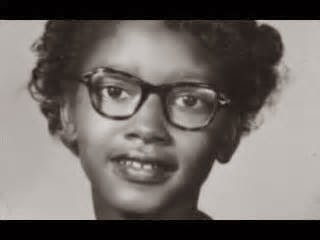
Claudette Colvin: The Teen Who Stood Against Segregation
In 1955, as a 15-year-old student at Booker T. Washington High School in Montgomery, Claudette Colvin refused to give up her seat on a bus to a white passenger. Claudette knew the segregation laws of the time, but they didn’t deter her. After living through and learning from the Jim Crow era, she was motivated to fight for her rights. After being forcibly removed from the bus, she was arrested. Dr. Martin Luther King Jr. led a group of civil rights leaders to advocate for Claudette. This was 9 months before Rosa Parks refused to move from her seat.
In 1956, attorney Fred Gray filed a federal lawsuit, Browder v. Gayle, that challenged bus segregation in Montgomery. Claudette was one of the four plaintiffs and a witness in the case. The case was successful, and it ended segregation on public transportation in Alabama.
Although just a teenager, Colvin took action to fight for her rights. As a young person, she was bold, courageous, and outspoken. Her legacy reminds us why young activists, including young voters, are critical to our work today.
,
,
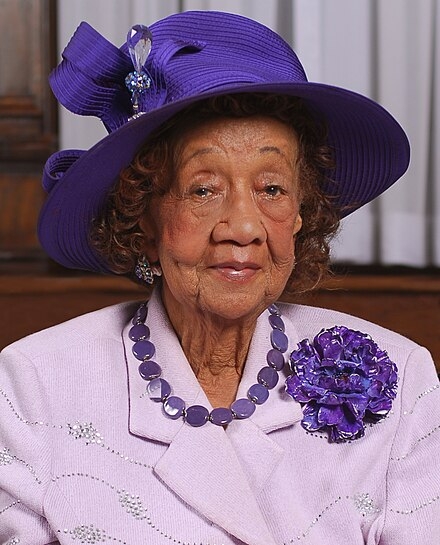
Dorothy Height: A Voting and Women’s Rights Advisor to Presidents
Dorothy Height worked fervently on the issues of voting rights, literacy, and empowerment of Black women.
She served as President of the National Council of Negro Women (NCNW) for forty years and was instrumental in creating various international volunteer programs through NCNW. During the 1960s, she organized “Wednesdays in Mississippi,” which brought together white women from the North with Black women from the South to fight against segregation.
She was one of the women who organized the 1963 March on Washington for Jobs and Justice. Height also played a pivotal role as a women’s rights activist during the Civil Rights movement, and her advice was sought by figures like President Dwight D. Eisenhower, Eleanor Roosevelt, and President Lyndon B. Johnson.
In 1990, Height established the organization African American Women for Reproductive Freedom. Just four years later, she was awarded the Presidential Medal of Freedom from President Bill Clinton. In 2017, she was immortalized as a US postage stamp!
,
,
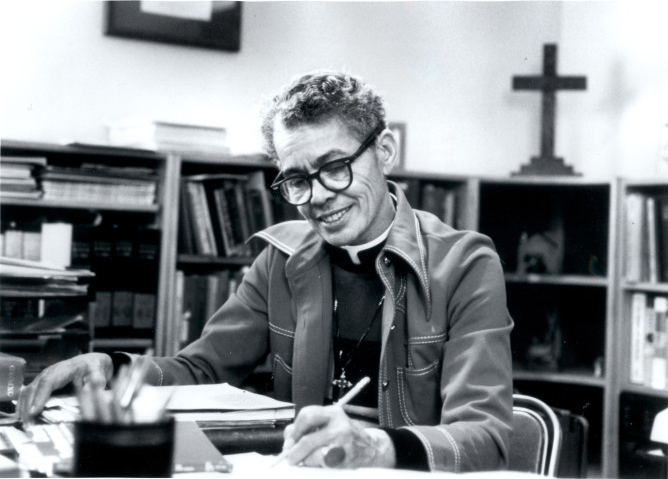
Rev. Dr. Pauli Murray: Priest, Scholar, Poet, and NOW Founder
The Reverend Dr. Pauli Murray was a civil and human rights activist, legal scholar, poet, and Episcopal priest. Murray was a pioneer of the fight for gender equality and LGBTQIA+ rights. She graduated top of her class at Howard University Law School and was the first Black person to earn a Doctor of the Science of Law degree from Yale University. Murray wrote extensively for the NAACP’s Crisis magazine, and she penned a letter to civil rights leaders about sexism in the movement.
In 1966, Murray co-founded the National Organization for Women (NOW). She was the first professor to introduce classes on African American and women’s studies at Brandeis University. Later in life, Murray earned her Master of Divinity and became the first Black woman to be ordained a priest in the Episcopal church.
,
,
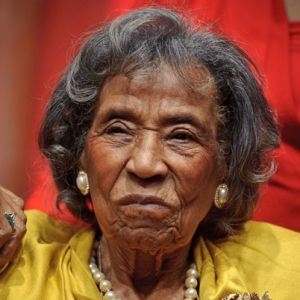
Amelia Boynton Robinson: A Community Organizer and Selma Marcher
Amelia Boynton Robinson was an activist in her local community and a key organizer of protests and boycotts in Montgomery.
As a graduate of Tuskegee University, Amelia educated people in rural Dallas County, Alabama, on agriculture and homemaking. She worked to educate and register Black voters via the Dallas County Voters League and was inspired by the work of the Student Nonviolent Coordinating Committee.
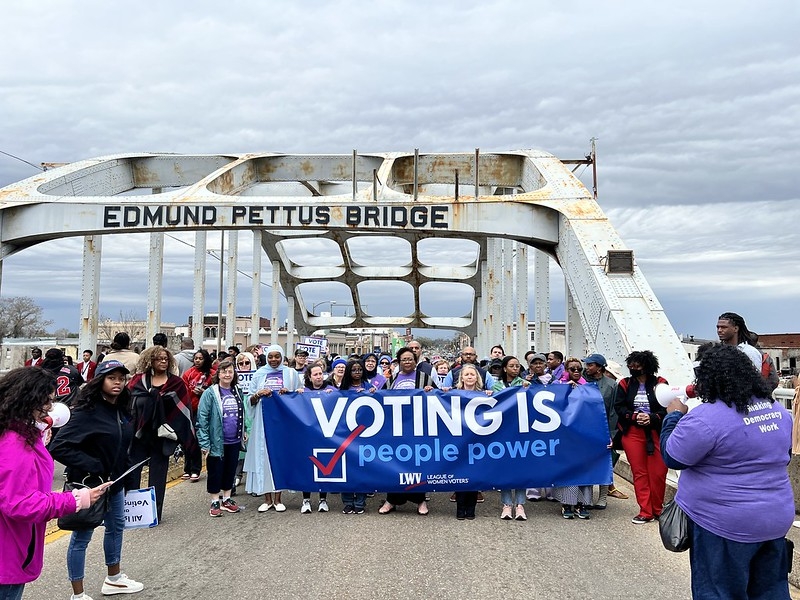
She was also on the frontlines of the 1965 march from Selma to Montgomery for “Bloody Sunday.” On Bloody Sunday, she refused to turn around and marched forward before being tear-gassed by state troopers. The efforts of Bloody Sunday pushed forward the passage of the Voting Rights Act of 1965, and Amelia was a guest of honor when the legislation was signed.
In 1990, she was awarded the Martin Luther King Jr. Freedom Medal. In 2015, she returned to Selma for the 50th Anniversary of the march from Selma to Montgomery and crossed the bridge once more.
,
,
Letting These Legacies Inspire Us
In his sermon given at St. John the Divine Church in 1956, Dr. Martin Luther King, Jr. said, “Change does not roll in on the wheels of inevitability but comes through continuous struggle. And so, we must straighten our backs and work for our freedom.”
This is our moment to harness the resilience of these foremothers of the Civil Rights movement. From their courage, resilience, and determination, there is a shining light that drowns out the darkness.
Claudette, Dorothy, Pauli, and Amelia made a lasting impact on the Civil Rights movement. Due to their sacrifice, steadfast commitment, and staunch efforts, they laid the foundation for Black women to organize, advocate, and empower their communities. They fought for Black women’s right to vote, advocated for issues that impacted their lives, and worked for their places in the movement. Their spirits of service and justice inspire our work to create a democracy that represents and engages us all.
You, too, can make a difference. Join our Unite and Rise movement to empower voters to lift their voices in this year’s midterm elections. Take action with Unite & Rise 8.5 and sign our commitment pledge today, and together we can continue to build upon the legacies of Claudette, Dorothy, Pauli, Amelia, and the many other women who paved the way for us today!