In 2026, women’s voices are more critical than ever.
Across the United States, decisions about healthcare access, economic stability, education, workplace protections, and access to the ballot are being debated and shaped in real time. In moments like these, civic participation becomes more than a principle; it becomes a responsibility shared by communities across the country.
Women play a central role in that participation. As voters, organizers, community leaders, and advocates, women shape how democracy responds to the realities families and communities face every day.
,
To get involved with your community, search our 800+ state and local Leagues.
,
Women are not a small voting bloc or a niche audience in American politics. They are one of the most influential forces in civic participation today; research shows they’re more likely to register to vote and to go to the polls than men. When women vote, organize, and engage in public life, they influence the direction of policies that affect millions of people nationwide.
Women Make Up Half Of The Electorate – and More Than Half of Voters
Women make up roughly half of the electorate in the United States, meaning their participation plays a decisive role in shaping elections and public policy debates.
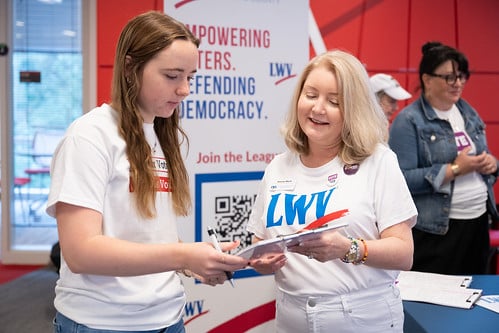
What’s more, in recent elections, women have consistently voted at higher rates than men. In fact, women have registered and voted at higher rates than men in every US presidential election since 1980.
,
,
This pattern reflects the growing role women play in civic engagement and public life. Higher participation rates mean women’s perspectives, priorities, and experiences increasingly shape the democratic process.
When large and diverse groups of people participate in elections, democratic systems become stronger and more representative. Participation helps ensure that public officials are accountable to the communities they serve and that policies reflect a broader range of lived experiences. In a time when women lack equal political representation and face increasing attacks on their reproductive rights and other freedoms, women’s lived experiences must be heard at the ballot box.
Women’s turnout also matters because public policy decisions directly affect everyday life, not just for women, but for all of us. Access to healthcare, economic opportunity, workplace protections, and voting rights all have real impacts on families and communities. Women’s civic participation is one of the most effective ways we can ensure our voices are heard in those decisions.
Women’s Participation Strengthens Democracy
When women participate, democracy becomes stronger.
,
,
A democracy that reflects the participation of its full electorate is more likely to be:
- More representative, because it includes a wider range of voices and experiences.
- More accountable, because leaders must respond to the needs of more communities.
- More responsive, because policies are shaped by the realities people face in their daily lives.
Political participation is one of the most direct ways people influence public decisions. By voting, organizing, and engaging in civic life, we help ensure that democratic institutions remain responsive and inclusive.
If women aren’t a part of this equation, we will not have a truly representative democracy.
Women Are Shaping Democracy Right Now
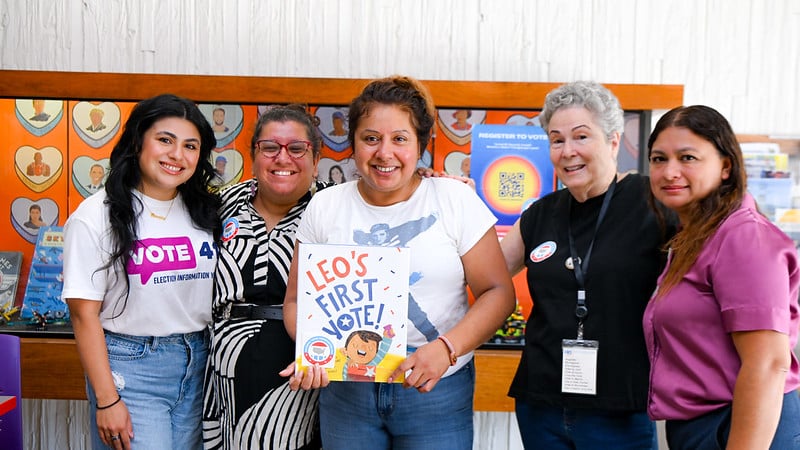
Women across the United States are already shaping democracy through everyday civic action.
,
,
They are registering voters, educating their communities, advocating for policies that affect families, participating in local and national elections, and helping build stronger civic institutions.
Participation does not always look the same. Sometimes it means casting a ballot. Sometimes it means organizing in a community, advocating for change, or helping others access the information they need to participate in elections. To get involved in your community, consider joining your local League.
What matters is that participation continues.
Because when people engage with democracy, institutions become stronger, more representative, and more accountable.
Democracy Moves With Women
Women are not merely observers of democracy. Across the country, they are actively shaping the civic life of their communities as voters, organizers, advocates, and leaders.
In moments when the stakes feel high and public policy decisions affect everyday life, civic participation matters more than ever.
Because democracy moves with women.