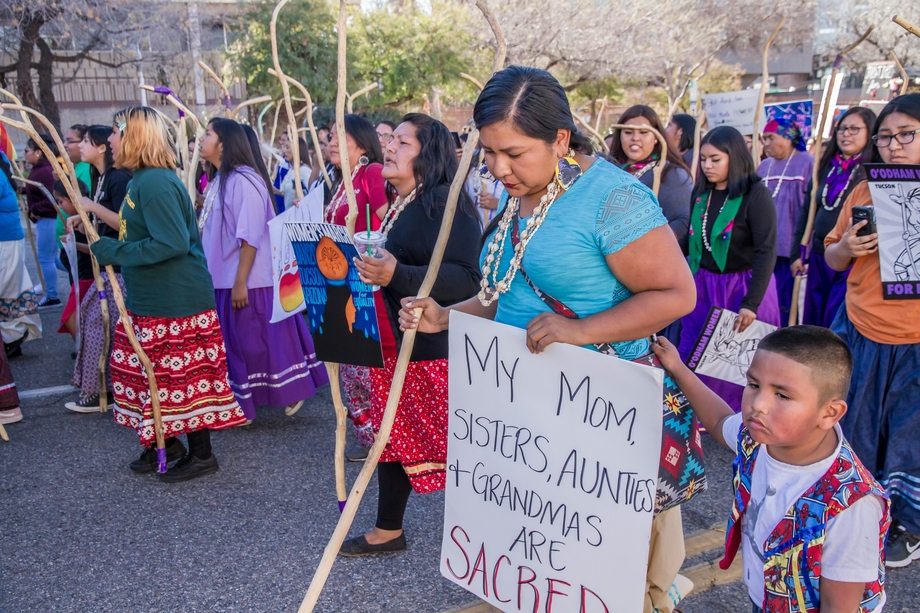
Native American women have long been leaders in shaping their communities, protecting their sovereignty, advocating for their rights, and expanding our ideas about what governance can look like.
,
,
From the fight for voting rights to the protection of sacred lands and the work of building stronger Tribal communities, Native women have been at the forefront of some of the country's most important movements for justice and representation. And in 2026, Native women and Two-Spirit leaders earned historic accomplishments in the US government, with the election of the first ever Native women governor and the first two Native women Senators (see our section on Deb Haaland) and an increase in Two-Spirit and LGBTQIA+ Indigenous candidates.
This Native American History Month, we're highlighting three trailblazers whose leadership continues to make an impact.
Wilma Mankiller: Leading Through Community
“Women can help turn the world right side up. We bring a more collaborative approach to government. And if we do not participate, then decisions will be made without us.”
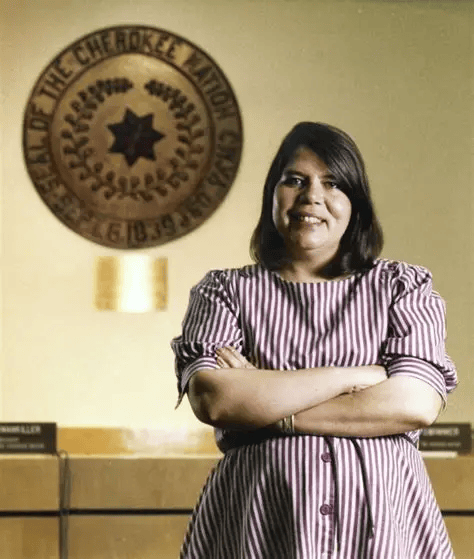
In 1985, Wilma Mankiller made history as the first female Principal Chief of the Cherokee Nation and the first woman to lead a major Native American tribe. She also dedicated her life to fighting for Native American rights.
,
,
Inspired by the women's suffrage movement, Mankiller began her social activism by empowering Native communities in California, serving as director of Oakland's Native American Youth Center. She believed that helping Native youth feel empowered and proud of their Native heritage could break down cycles they grew up in. Before becoming Principal Chief of the Cherokee Nation, she led many community development efforts, focusing on improving access to water and housing.
As Principal Chief of the Cherokee Nation, Wilma revitalized the Nation's tribal government, and heavily advocated for education, healthcare, and housing services.
Eliza Burton "Lydia" Conley: Fighting to Protect Sacred Land
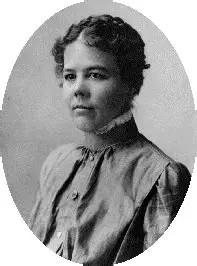
Eliza Burton "Lyda" Conley was a member of the Wyandot tribe and was the first Native American to argue a case in front of the Supreme Court. She dedicated most of her life to protecting the Huron Indian Cemetery in Kansas, where her sister, mother, and hundreds of Wyandot ancestors were buried. As Kansas City expanded, the cemetery land became increasingly valuable.
Conley was determined to fight for the land's protection, so she enrolled in law school — and was the only woman in her class.
,
,
Eventually, Congress passed legislation in 1906 that allowed the sale of the land and the relocation of bodies to another cemetery. In addition to staging in-person protests with her sister, Conley filed a lawsuit and argued the case in front of the Supreme Court. Despite her efforts, she lost the case and SCOTUS ruled that the government had the right to sell the land.
Conley’s work in protecting the Huron Indian Cemetery didn’t stop there, and she eventually inspired Kansas State Senator Charles Curtis to pass a law protecting the cemetery from further development. In the years to come, Conley continued to advocate in defense of the site and was even arrested for her efforts. Tragically, she died in 1946, but her work eventually saw greater fruit. In 1971, the Huron Indian cemetery was added to the National Register of Historic Places, and in 2017, it became a National Historic Landmark.
Deb Haaland: Breaking Barriers in National Leadership
"We must shift our thinking away from short-term gain toward long-term investment and sustainability, and always have the next generations in mind with every decision we make."
Native women continue to break barriers in the government, like Deb Haaland, a member of the Pueblo of Laguna tribe and a 35th-generation New Mexican. In 2026, she became the first Native American woman to be elected as a state governor when she won the race in New Mexico; notably, this same year, Congress welcomed its first two Native women senators, Peggy Flanagan, US Senator-elect for Minnesota and a citizen of the White Earth Nation, and Mary Peltola, US Senator-elect for Alaska and a Yup’ik Alaska Native.
Before her governorship, Haaland was the first Native American to serve as US Secretary of the Interior and was one of the first Native American women in Congress.
,

,
During her time as Secretary of the Interior, Haaland advocated for environmental justice, climate issues, and strengthening the relationship between Native communities and the federal government.
Their Legacies Are Still Shaping Democracy
These three women remind us that democracy is something people advocate, protect, and build together. As we recognize Native American Heritage Month, learning these stories is one way to better understand the history and ongoing contributions of Native women.