Who blazed the trail for voting rights for women across the nation? Generations of women of all classes and races advocated for their political rights. The Smithsonian, Library of Congress, and National Archives are sharing lesser-known stories of suffragists to mark the centennial of the 19th Amendment. Learn #19SuffrageStories through the month of August.
Story 19: The 19th Amendment
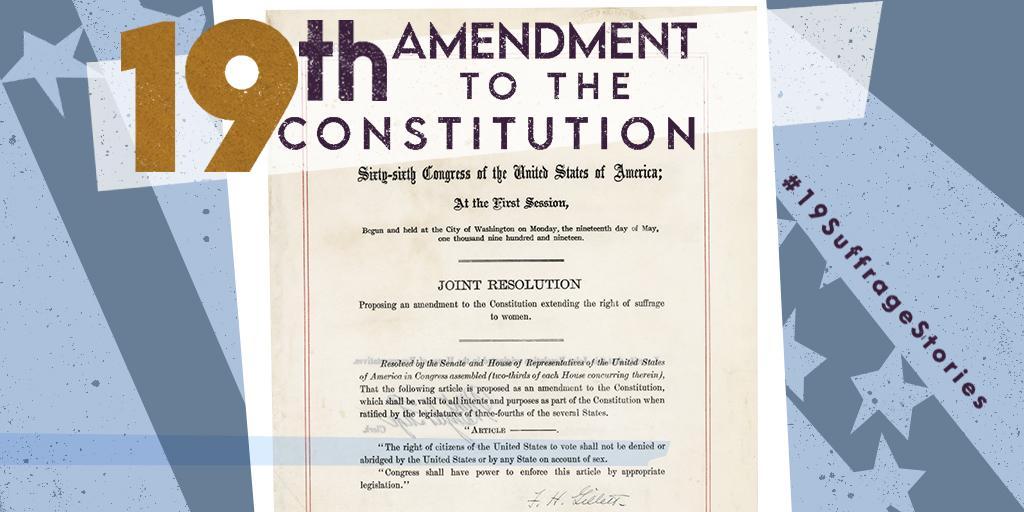
Nineteenth Amendment to the United States Constitution. National Archives.
After Congress passed a joint resolution for the 19th Amendment and Tennessee became the 36th state to ratify the amendment, it went into effect on August 26, 1920. The amendment states that the "right of citizens of the United States to vote shall not be denied or abridged by the United States or by any State on account of sex." But it did not guarantee the ballot.
Saying the 19th Amendment gave women the right to vote leaves out the stories of the women, including many women of color, who fought for this right before and after the amendment went into effect. In 1920, many women were still denied access, including Native American women, African American women, Puerto Rican women, and Asian American women.
Learn more:
- Who Was Left out of the Story? from our National Museum of American History
- Pen used to sign the ratification of the 19th Amendment from our National Museum of American History
- Votes for Women: A Portrait of Persistence, a National Portrait Gallery virtual exhibition on Google Arts and Culture
- 19th Amendment History from our National Museum of American History
Story 18: Eighteen African Americans Try to Register to Vote
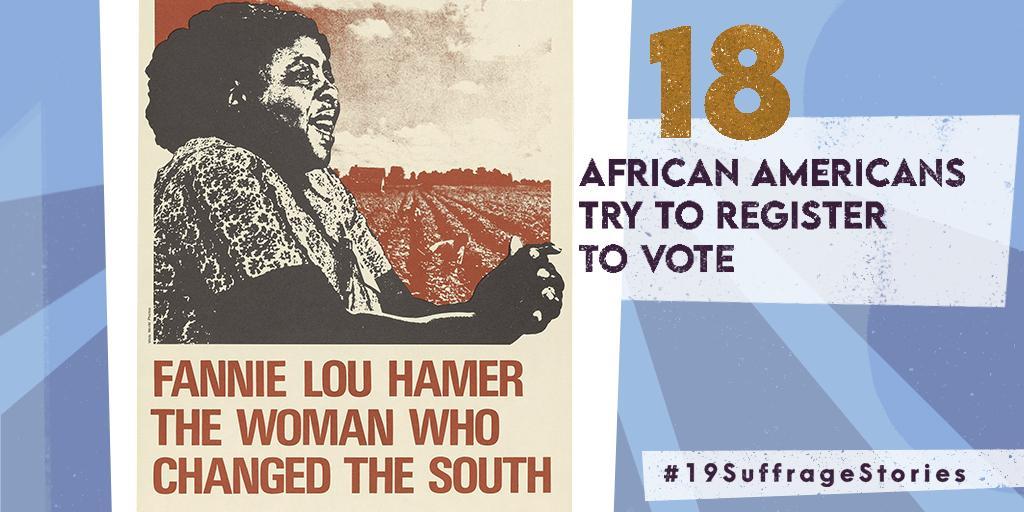
Poster of Fannie Lou Hamer from our National Museum of American History.
In 1962, Fannie Lou Hamer was one of 18 African Americans who traveled 26 miles from Ruleville, Mississippi, to the courthouse in Indianola, Mississippi, to register to vote. The group was told they would need to pass a literacy test in order to vote.
While the 19th Amendment granted many American women the right to vote, it did not remove racist Jim Crow laws that obstructed African American civil rights.
Hamer went on to help found the Mississippi Freedom Democratic Party. She gained national attention for the cause of African American voting rights at a televised committee hearing of the 1964 Democratic National Convention where she described the barriers that African Americans continued to face at the polls. Her speech galvanized support for the 1965 Voting Rights Act.
Learn more:
- Photo of Fannie Lou Hamer by Charmian Reading in our National Portrait Gallery
- Photo of Hamer by Bruce Davidson in our National Portrait Gallery
- Hear Hamer discuss being fired after she tried to vote at a Student Nonviolent Coordinating Committee event in Washington, D.C., made accessible by our Smithsonian Transcription Center
- Hear Hamer perform "Songs My Mother Taught Me" from Smithsonian Folkways
- Hear Hamer lead the Freedom Singers in "We Shall Overcome" from Smithsonian Folkways