June Month Long Observances
- Alzheimer’s and Brain Awareness Month
- Black Music Appreciation Month
- Caribbean American Heritage Month
- Deaf-Blind Awareness Month
- Filipino Heritage Month
- Men’s Mental Health Month
- National Immigrant Heritage Month
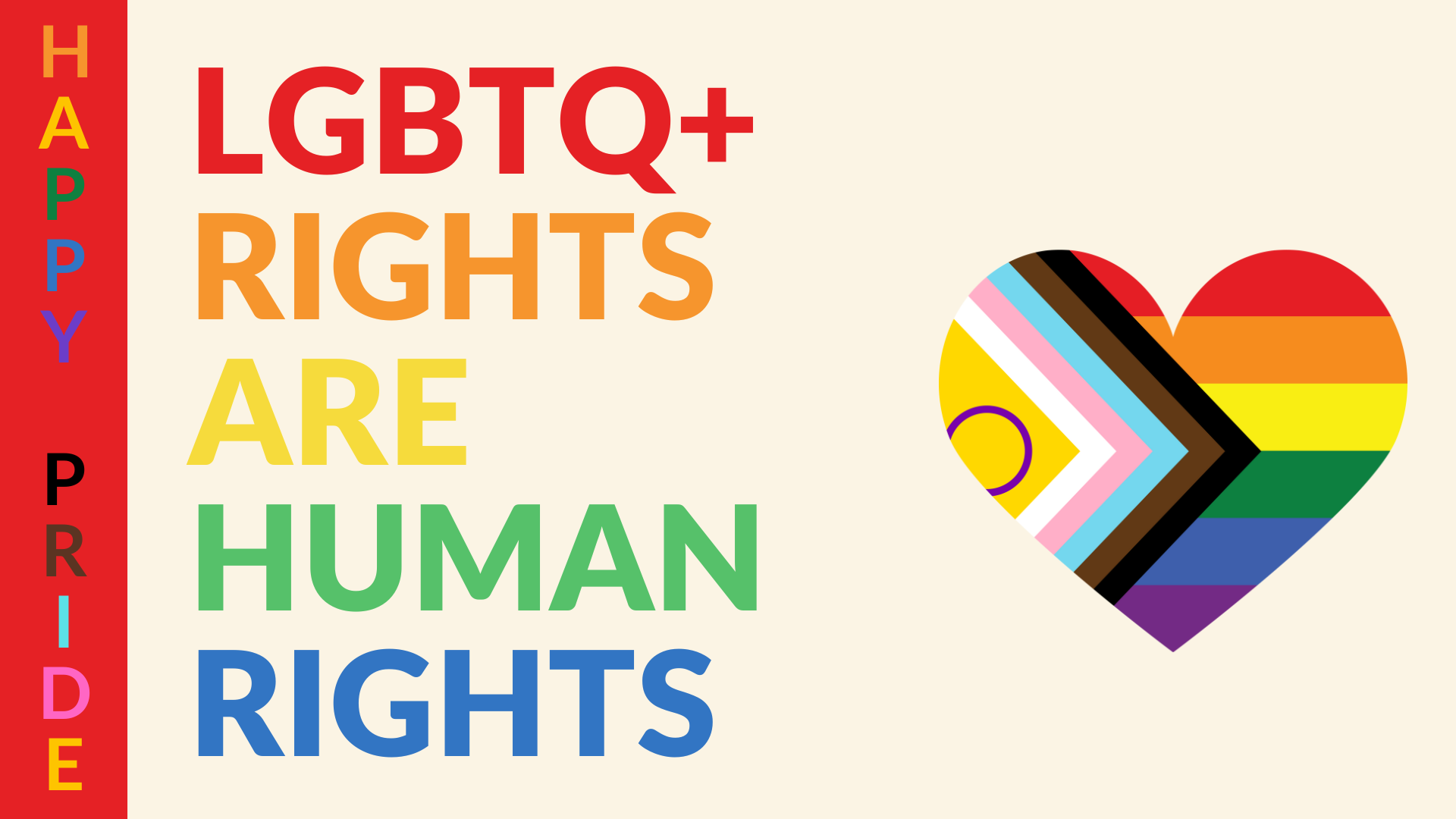
LGBTQ+ Pride Month
During the month of June, the Lesbian, Gay, Bisexual, Transgender and Queer (LGBTQ) community members and their allies celebrate Pride Month. The LGBTQ+ community and their allies reflect on the 1969 Stonewall Uprising. On June 28,1969, New York City police raided the Stonewall Inn, a gay club. Angered by police harassment and social discrimination, there were riots outside of Stonewall Inn. The Stonewall Riots lasted six days and mobilized the gay rights movement of the 1960s. June commemorates those who identify as LGBTQ and calls for greater unity, visibility, and equality for the LGBTQ community. Pride Month offers an opportunity to reflect on the advances made and the work that still needs to be done. This is a time to educate people on the discrimination and harassment this group still faces.
“All human beings are born free and equal in dignity and rights.” - Article I; Universal Declaration of Human Rights. LGBTQIA+ rights are not special rights.
June 2 – Indian Citizenship Act of 1924
Also known as the Snyder Act of 1924, the Indian Citizenship Act granted United States citizenship to Native Americans born within the country. However, citizenship did not guarantee full voting rights, as many states used discriminatory laws and practices to restrict Native American participation in elections. Although some Native Americans voted earlier, barriers persisted in several states until the civil rights era, with the Voting Rights Act of 1965 helping secure broader protections against voter discrimination. [For more information click on: https://www.loc.gov/classroom-materials/elections/right-to-vote/voting-rights-for-native-americans/]
June 5 – National Gun Violence Awareness Day
National Gun Violence Awareness Day, observed annually on the first Friday in June and followed by Wear Orange Weekend, honors those who have lost their lives to gun violence and raises awareness about its impact on communities. Inspired by the 2013 death of 15-year-old Hadiya Pendleton, the observance encourages reflection, remembrance, and community action to address gun violence. Participants often wear orange – a symbol originating from hunters’ safety gear – to honor victims and advocate for change.
The Wear Orange Weekend 2026 Materials, including graphics and a bulletin insert,are now available for download here.
June 5 – World Environment Day
World Environment Day is observed annually on June 5 and serves as the United Nations' principal platform for encouraging awareness and action on environmental issues. Established by the United Nations in 1972, the day brings attention to challenges such as climate change, biodiversity loss, pollution, extreme weather events, and the sustainable management of natural resources. As communities around the world continue to face the impacts of rising temperatures, habitat loss, and damage to natural ecosystems, World Environment Day encourages individuals, businesses, and governments to take meaningful action to protect the planet. World Environment Day encourages individuals, businesses, and governments to take meaningful action to protect the planet. The observance promotes environmental stewardship and reminds us that a healthy environment is essential to the well-being of current and future generations.
June 8–14: Vision Rehabilitation Week
Vision Rehabilitation Week is a time dedicated to raising awareness about the importance of services that help individuals with vision loss lead independent and fulfilling lives. It highlights the work of vision rehabilitation professionals and promotes access to resources that support people in adapting to visual challenges. [For more information, click here.]
June 12 – Loving Day
Loving Day commemorates the 1967 U.S. Supreme Court decision in Loving v. Virginia, which struck down laws banning interracial marriage and made interracial marriage legal in all 50 states, including the 16 states that previously enforced anti-miscegenation laws. These laws had enforced racial segregation by criminalizing marriage and relationships between people of different races. The decision guaranteed the right of interracial couples to marry and live freely without state interference. Loving Day now promotes love, equality, and inclusion, encouraging respect and unity in diverse communities.
June 15 – Anniversary of DACA (Deferred Action for Childhood Arrivals)
This year marks the 15th anniversary of DACA, a policy established in 2012 to provide temporary protection from deportation and work authorization to certain undocumented immigrants who were brought to the United States as children, often referred to as "Dreamers." DACA was created in response to the lack of congressional action on immigration reform and has enabled hundreds of thousands of recipients to pursue education, careers, and greater economic stability while contributing to their communities. Although DACA has provided important protections, it does not offer a pathway to citizenship or permanent legal status, and its future has been the subject of ongoing legal challenges. The anniversary serves as an opportunity to recognize the contributions of DACA recipients and to reflect on the need for comprehensive immigration reform that would provide long-term stability, legal protections, and a pathway to citizenship for Dreamers and other undocumented individuals living in the United States.
June 16–17: Hijri New Year
The Islamic New Year, also known as the Hijri New Year, marks the beginning of the Islamic lunar calendar and is observed on the first day of Muharram, its first month. It commemorates the Hijra, the migration of the Prophet Muhammad and his followers from Mecca to Medina in 622 CE to escape persecution and establish the early Muslim community. This event is a defining moment in Islamic history, symbolizing resilience, faith, and the ability to practice religion freely. For Muslims, the day is generally a time of reflection, renewal, and spiritual intention-setting rather than festive celebration. Observance varies across cultures but often includes prayer, reflection, religious teachings, and family or community gatherings that honor the significance of the Hijra and the start of the new year.
June 18 – International Day of Countering Hate Speech
This day, recognized by the United Nations, highlights the global impact of hate speech and the harm it causes to individuals, communities, and democratic societies. It emphasizes the importance of addressing hate speech through education, dialogue, media literacy, and respectful communication. The day calls on individuals, institutions, and governments to actively challenge harmful language, support those targeted by hate, and promote inclusive spaces both online and in person. It also encourages people to speak up against misinformation and prejudice, engage in learning about different communities, and help build cultures rooted in dignity, respect, and understanding.
June 19 – Juneteenth
Juneteenth marks the day in 1865 when General Gordon Granger arrived in Galveston, Texas, and announced to enslaved African Americans that they were free under the terms of the Emancipation Proclamation, more than two years after it was issued. Observed on June 19, it commemorates this delayed announcement of emancipation and serves as a powerful reminder of both the end of slavery and the ongoing struggle for justice and equality. Juneteenth specifically represents the announcement of freedom reaching Texas, rather than the literal moment every enslaved person everywhere became free; that broader emancipation was a gradual and uneven process across the United States that ultimately culminated in the 13th Amendment in 1865. It is also a celebration of Black heritage, resilience, and culture, honored through gatherings, education, reflection, and festivities that recognize both Black history and the meaning of freedom.
June 20 – World Refugee Day
World Refugee Day shines a light on the resilience, courage, and bravery of people who have been forced to flee from their homes due to conflict, violence, or persecution. It encourages global support, understanding, and action to uphold the rights and dignity of refugees around the world. First observed on June 20, 2001, to mark the 50th anniversary of the 1951 Convention Relating to the Status of Refugees. It is an opportunity to build understanding, inspire action, and affirm the rights, dignity, and humanity of refugees around the world.
June 22 – 4th anniversary of the Dobbs v. Jackson Women’s Health Organization decision
Dobbs v. Jackson Women’s Health Organization (2022) is a U.S. Supreme Court case that reviewed a Mississippi law banning most abortions after 15 weeks of pregnancy. The Court’s decision overturned Roe v. Wade and Planned Parenthood v. Casey, ruling that the Constitution does not confer a federal right to abortion and returning the authority to regulate abortion laws to individual states.
June 23 – 54th anniversary of Title IX
Title IX is a federal civil rights law passed in 1972 as part of the Education Amendments that prohibits sex-based discrimination in any education program or activity receiving federal financial assistance, including most public schools and universities in the United States. It has been highly influential in expanding educational opportunities for women and girls by increasing access to academic programs, scholarships, and professional training, and it has also transformed school athletics by requiring equitable opportunities and treatment for female athletes. Over time, courts and federal agencies have interpreted Title IX to address sexual harassment and sexual violence in education, making schools responsible for investigating complaints and providing protections, which has made it a key legal tool for campus safety and accountability. In recent years, Title IX has remained in force but has been the subject of significant legal and political debate. In 2025, a federal court vacated regulations issued in 2024, leaving the 2020 federal regulations in effect, while ongoing court cases and policy debates continue to examine how broadly the law applies in areas such as employee protections and gender identity in education. As a result, Title IX remains a foundational civil rights law protecting against sex discrimination, though the scope and enforcement of certain protections continue to evolve through court rulings and federal policy changes.
June 28 – Pride Day
Pride Day is an observance during LGBTQ+ Pride Month that celebrates the history, achievements, and resilience of LGBTQ+ communities. June 28 is widely recognized as Pride Day because it marks the anniversary of the 1969 Stonewall Uprising in New York City and the first Pride march, held on June 28, 1970. However, Pride celebrations vary by community, and many cities and organizations hold Pride events on different dates throughout June and throughout the year.
June 28 – Stonewall Uprising
The Stonewall Uprising, also known as the Stonewall Rebellion, is widely considered a turning point in the modern LGBTQ+ rights movement. In the early hours of June 28, 1969, New York City police raided the Stonewall Inn, a gay bar in Greenwich Village. Frustrated by years of police harassment, discrimination, and criminalization, patrons and community members resisted the raid, sparking several days of demonstrations and clashes with police. The unrest continued intermittently for six days and inspired a new era of LGBTQ+ activism and advocacy.