November Month Long Observations
- Diabetes Awareness Month
- National Alzheimer’s Awareness Month
- National Veterans and Military Families Month
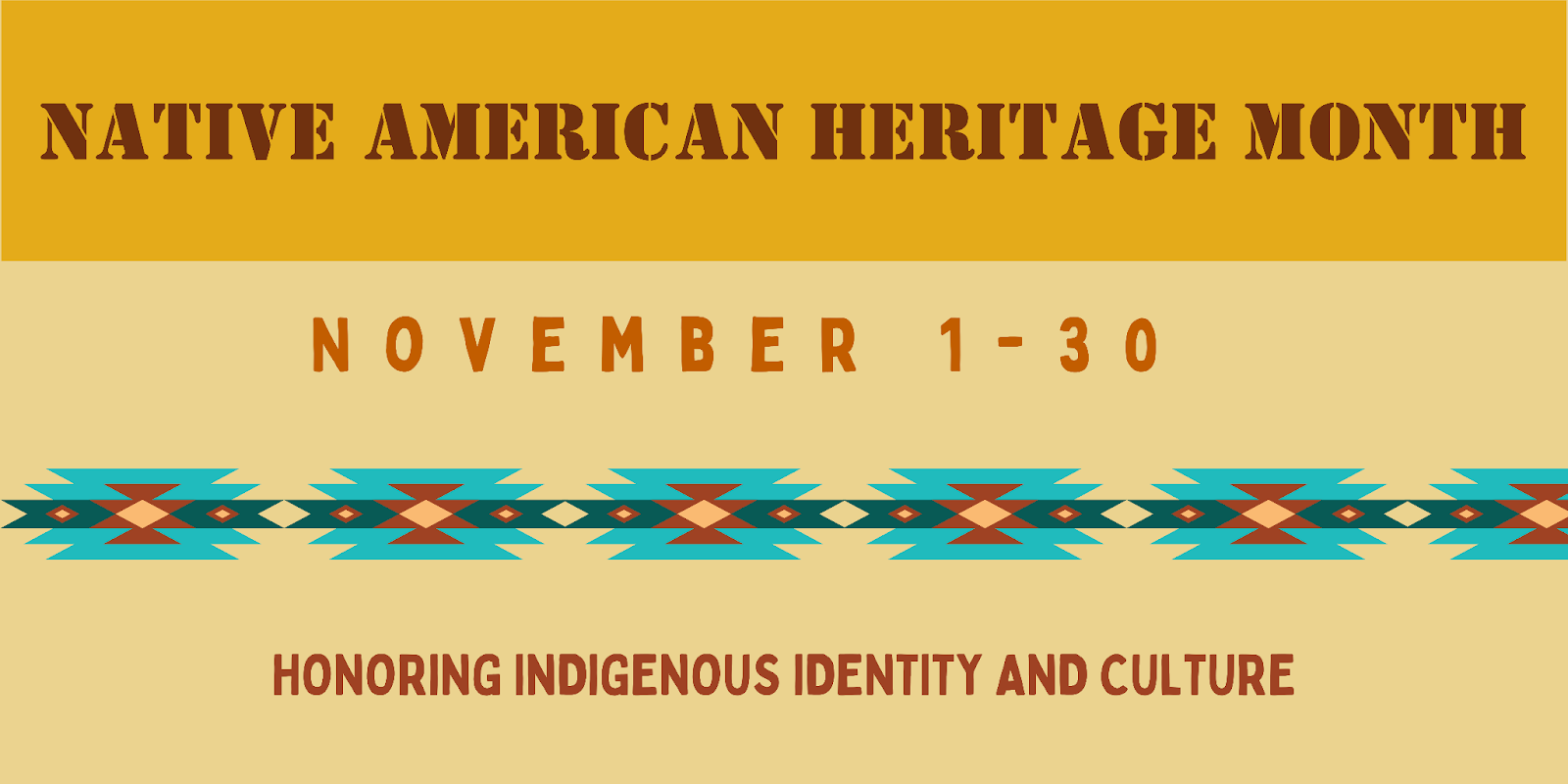
Native American Heritage Month
Native American Heritage Month (NAHM) celebrates the rich cultures, traditions, and contributions of the Native American and indigenous populations in the United States. Originally observed as American Indian Day in 1915, it was officially expanded to a month-long observation in 1990 through legislation passed by Congress. This month honors the diverse backgrounds, experiences, and achievements of Indigenous communities, while also serving as a time to reflect on ongoing efforts to preserve Native cultures, languages, and rights. NAHM raises awareness about the challenges Native Americans continue to face and invites people of all backgrounds to learn about indigenous history, culture, and the evolving experiences of Indigenous communities today
Movember
Movember is an annual event held each November to raise awareness about men’s health issues, including prostate cancer, testicular cancer, and mental health challenges. Participants often grow mustaches to spark conversations and encourage early detection and healthy living. The movement also raises funds to support research, education, and programs that improve men’s health outcomes worldwide.
November 6 – 10: Diwali
Diwali, also known as the Festival of Lights, is celebrated by millions across India and around the world. This is one of the most important Hindu festivals that typically occurs in October or November and lasts for five days.
Each day has its own significance.
- Dhanteras: The first day marks the beginning of Diwali. People clean and decorate their homes, purchase new items, especially gold or silver, and worship Lord Dhanvantari for health and prosperity.
- Naraka Chaturdashi (Choti Diwali): The second day commemorates the victory of Lord Krishna over the demon Narakasura. People wake up early, take ritual baths, and light diyas to signify the triumph of light over darkness.
- Lakshmi Puja (Diwali): The main day of Diwali is dedicated to worshiping Goddess Lakshmi, the deity of wealth and prosperity. Families perform prayers, light diyas, and enjoy festive meals and fireworks.
- Govardhan Puja: The fourth day celebrates the lifting of Mount Govardhan by Lord Krishna. In some regions, this day is marked by preparing a large mound of food to symbolize the mountain and offering prayers.
- Bhai Dooj: The final day is dedicated to the bond between brothers and sisters. Sisters pray for their brothers' well-being, and brothers give gifts in return, celebrating family ties.
The festival symbolizes the victory of light over darkness, good over evil, and knowledge over ignorance. People celebrate by lighting oil lamps (diyas), decorating their homes with colorful rangoli (art made from colored powders), and bursting fireworks. Families also exchange gifts and sweets, perform prayers (pujas) to deities like Lakshmi (goddess of wealth), and gather for festive meals.
In addition to Hindu traditions, Diwali is also celebrated by Jains, Sikhs, and some Buddhists, each with their own interpretations and customs. Overall, Diwali is a time for joy, renewal, and togetherness.
The festival of lights, celebrating the victory of light over darkness.
November 10 – Birthday of the Bab
Bahá’ís around the world celebrate the birth of the Báb. Born Siyyid Alí-Muḥammad in Shíráz, Persia (present-day Iran) in 1819. He took the title, “the Báb,” which means “the Gate” in Arabic. Bahá’ís recognize him as a Messenger of God whose teachings prepared the way for Bahá’u’lláh. Together, the Báb and Bahá’u’lláh are regarded as the two founding figures of the Bahá’í Faith.
Beginning in 1844, the Báb called for spiritual and moral renewal, encouraged people to seek truth independently, and emphasized improving the position of women and caring for people experiencing poverty. He also taught that another divine messenger would soon appear. Bahá’ís believe Bahá’u’lláh fulfilled that promise.
His message emerged during a period of social tension in Persia, when some Shi‘a Muslims were awaiting a promised spiritual leader who would usher in an era of justice and renewal.
His writings and the efforts of his followers helped spread the movement among religious scholars, merchants, artisans, and others seeking spiritual renewal and change. Its challenge to established religious authority also brought severe persecution.
The Báb was imprisoned and executed in Tabríz on July 9, 1850, at age 30. His brief ministry nevertheless established a religious movement from which the Bahá’í Faith emerged.
This observance offers an opportunity to learn about our Bahá’í neighbors, respect religious diversity, and reflect on the importance of freedom of belief and protection from religious persecution.
November 11 – Veterans Day
Veterans Day is a time to thank living veterans for their service, honor their bravery, and recognize the sacrifices they have made to protect our national security. Originally called Armistice Day, the holiday was first observed on November 11, 1919, to commemorate the truce that ended World War I on that same date in 1918. In 1926, it became a national observance, and in 1954, it was officially renamed Veterans Day to honor all U.S. veterans, not just those who served in World War I.
November 13 – 19: Transgender Awareness Week
Transgender Awareness Week is a week-long observance focused on raising awareness of the challenges faced by transgender and gender non-conforming individuals, while promoting understanding and celebrating the resilience, identities, and contributions of the transgender community. During this week, attention is drawn to the discrimination, violence, and barriers to healthcare that many transgender people experience. It also serves as an opportunity to reflect on the importance of equality, respect, and inclusion for all gender identities, while also working toward a world where transgender individuals can live free from fear, discrimination, and violence.
November 16 – International Day For Tolerance
International Day for Tolerance promotes respect, understanding, and peaceful coexistence among people of all cultures, religions, and backgrounds. Proclaimed by UNESCO in 1995 and recognized by the United Nations in 1996, the day encourages individuals, communities, and governments of the importance in creating inclusive societies.
This observance calls on us to challenge intolerance, discrimination, and prejudice, while recognizing the dignity and rights of others. We can put these values into practice by questioning stereotypes, listening to perspectives different from our own, and speaking up against discrimination in our communities.
November 19 – International Men’s Day
International Men’s Day recognizes the contributions of men and boys to their families and communities, celebrates positive role models, and raises awareness of their health and well-being.
The modern observance began in Trinidad and Tobago in 1999, led by historian Dr. Jerome Teelucksingh. He chose November 19 to honor his father’s birthday and the positive example his father set. The date also commemorates a moment of national unity in 1989, when Trinidad and Tobago’s soccer team’s bid to qualify for the World Cup brought people together across racial, religious, and social differences.
The day encourages conversations about men’s physical and mental health and how rigid expectations of masculinity can discourage emotional expression, caregiving, or seeking help. It promotes supportive relationships rooted in mutual respect and shared responsibility, while recognizing how race, disability, income, sexual orientation, and gender identity shape the experiences of men and boys.
We can honor this day by checking in with the men and boys in our lives, recognizing those who model kindness and respect, and challenging messages that discourage vulnerability. Through inclusive mentoring programs and spaces where men and boys feel comfortable expressing themselves and seeking support, we can help build healthier communities for everyone.
November 20 – Transgender Day of Remembrance
Transgender Day of Remembrance honors those who have lost their lives due to anti-transgender violence. It is a time to remember the individuals behind the names and mourn alongside the communities who loved them.
This day draws attention to the intersecting effects of transphobia, racism, and discrimination, particularly for transgender people of color. We can honor those lost by challenging anti-transgender prejudice, supporting transgender-led organizations, and advocating for communities where transgender people can live safely and with dignity.