August Month-Long Observances
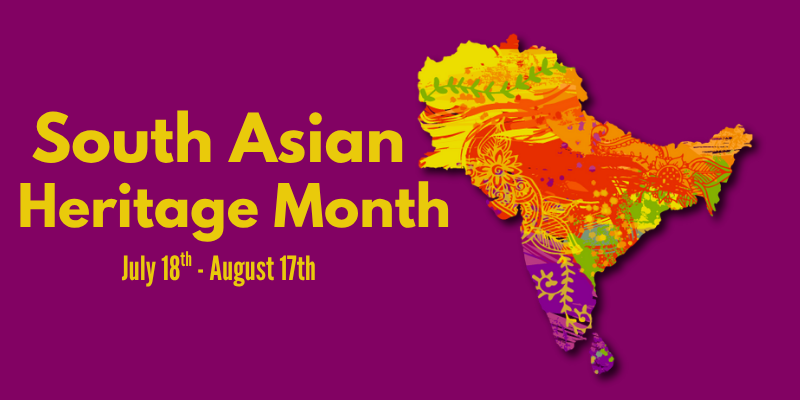
- July 18 – August 17: South Asian Heritage Month
- National Black Business Month
- National Breastfeeding Month
- National Immunization Awareness Month
- National Wellness Month
July 18 – August 17: South Asian Heritage Month
South Asian Heritage Month (SAHM) is a month-long observance that takes place from July 18 to August 17 to celebrate and reflect on the rich histories, cultures, and contributions of people from the South Asian diaspora. The diaspora includes communities with heritage from Afghanistan, Bangladesh, Bhutan, India, the Maldives, Nepal, Pakistan, and Sri Lanka.
Established in 2020, SAHM aims to explore the deep connections between South Asia and the United Kingdom (UK), acknowledging shared histories shaped by colonialism, migration, and identity. The month is also an opportunity to highlight the diversity within South Asian cultures, promote dialogue, and celebrate the ongoing contributions of South Asian people to British society.
The timing of SAHM is significant:
-
July 18 marks the date the Indian Independence Act was passed in 1947, leading to the creation of India and Pakistan as independent nations.
-
August 17 commemorates the announcement of the Radcliffe Line, which established the border between India and Pakistan, triggering one of the largest mass migrations in history, accompanied by widespread violence and the deaths of hundreds of thousands.
August 18 – Anniversary of 19th Amendment Ratification
On August 18, 1920, the 19th Amendment was ratified, marking a pivotal moment in the fight for women's voting rights by prohibiting the denial of the right to vote on the basis of sex. This year, we commemorate the 106th anniversary of this historic milestone and recognize the generations of women who fought tirelessly for political equality, including women of color whose contributions to the suffrage movement were often overlooked or marginalized.
While the 19th Amendment represented a major step forward, it did not guarantee equal access to the ballot for all women. Many women of color continued to face discriminatory laws and practices including: poll taxes, literacy tests, intimidation, and other barriers. Native American and Asian American women also faced citizenship restrictions that affected voting eligibility. The Voting Rights Act of 1965 later provided critical federal protections against racial discrimination in voting.
As we reflect on this important milestone, we recognize both the progress it represents and the work that continued long after ratification to expand access to the ballot.
August 19 – World Humanitarian Day
World Humanitarian Day honors the courage, dedication, compassion, and sacrifice of humanitarian workers who risk their lives to help others in times of crisis around the world. It marks the anniversary of the 2003 bombing of the United Nations headquarters at the Canal Hotel in Baghdad, which killed 22 people, including humanitarian workers Today, we remember not only those lost in that attack, but all who have been injured or killed while providing aid to communities affected by war and armed conflict, genocide and other forms of persecution, natural disasters, famine, and forced displacement. This day is also a call to people experiencing humanitarian crises and to recognize and support those working to provide lifesaving assistance and protect human dignity around the world.
Call to Action: Ways You Can Get Involved
As an individual, there are many ways you can recognize World Humanitarian Day and support communities experiencing humanitarian crises.
1. Advocate for refugee and asylum protections
Contact your elected officials to support legislation that protect the rights and dignity of refugees, asylum seekers, and displaced people, including those fleeing war, genocide, persecution and political violence. Protecting human rights is essential to a strong democracy.
2. Educate yourself and others
Volunteer with local organizations serving immigrant and refugee communities and support opportunities for civic education, community engagement, and participation.
3. Support accessible voter outreach
Volunteer to help ensure eligible voters in immigrant and refugee communities have access to nonpartisan voter education, language-accessible materials, and voter registration assistance.
4. Support civic engagement in immigrant and refugee communities
Volunteer with local organizations serving immigrant and refugee communities and support opportunities for civic education, community engagement, and participation.
5. Stand in solidarity with communities experiencing humanitarian crises
Raise awareness about humanitarian crises, support reputable humanitarian organizations, and use your individual voice to advocate for human dignity, peace, justice, and the protection of human rights.
August 23 – International Day for the Remembrance of the Slave Trade and its Abolition
This day honors the millions of African people who were captured, forcibly taken from their families and homelands, transported across the Atlantic, and bought and sold as property through the transatlantic slave trade. It also recognizes the courage and resistance of those who fought against enslavement and for their freedom.
August 23 marks the anniversary of the uprising that began during the night of August 22-23, 1791, in Saint-Domingue (present-day Haiti). Led by enslaved people seeking their freedom, the uprising became a pivotal moment in the Haitian Revolution and the broader struggle against slavery and colonialism.
In recognizing this history, we remember those who endured and resisted slavery while reflecting on the enduring legacies of the slave trade, including racism and racial inequality. This observance also reminds us of the importance of confronting this history and continuing to advance freedom, equality, and human dignity.
August 26 – Women's Equality Day
Women's Equality Day is celebrated on August 26 to commemorate the adoption of the 19th Amendment to the United States Constitution in 1920. The 19th Amendment prohibits the federal government or any state government from denying a citizen's right to vote on account of sex.
Did you know that the 19th Amendment did not guarantee equal access to the ballot for all women? Although women of color participated in and helped lead the fight for voting rights, many continued to face significant barriers after 1920. Native American women faced restrictions on citizenship and discriminatory state voting laws even after the Indian Citizenship Act of 1924. Federal laws restricting Asian immigrants' ability to become U.S. citizens also prevented many Asian American women from becoming eligible to vote. Between 1943 and 1952, changes to federal immigration and naturalization laws gradually removed racial barriers to citizenship for Asian immigrants, expanding access to citizenship and, consequently, voting eligibility.
Black women and other women of color, particularly in the South, continued to encounter poll taxes, literacy tests, discriminatory registration practices, intimidation, and violence designed to prevent them from voting. The Voting Rights Act of 1965 became a landmark federal protection against racial discrimination in voting, outlawing literacy tests and providing new federal enforcement mechanisms to protect access to the ballot.